
Sophie Gaïda
PhD student & recipient of the agrégation concours in English literature (2024)
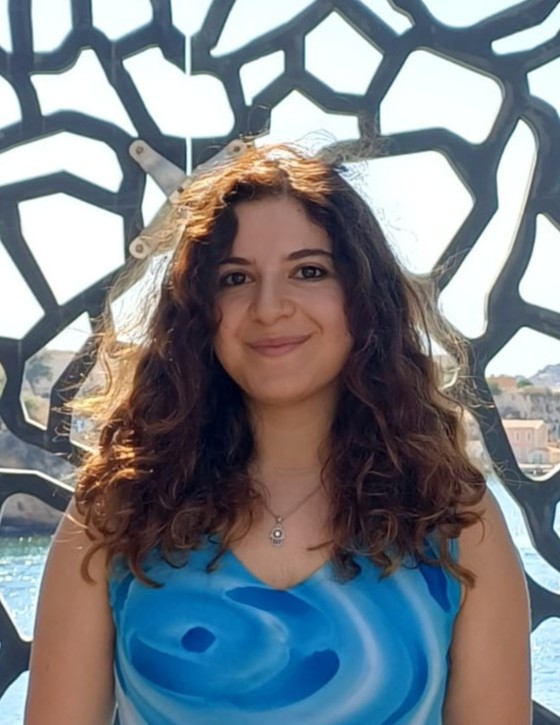
Sophie Gaïda is a PhD student and recipient of the agrégation concours in English literature (2024). She is an early-career educator and researcher.
Sophie has completed her studies at the ENS (Ecole Normale Supérieure) in Lyon, France, and was a lectrice (French langage tutor) in Cambridge (2022-2023) and Oxford (2024-2025). She is a PhD candidate at Sorbonne-Université on the themes of Sea Country, migrations and waste. She is supervised by Fiona McCann (Sorbonne-University) and Estelle Castro-Koshy (Université de Bretagne Occidentale). Her research focuses on the relationship between Oceanian writers and artists and oceanic pollution, and their relationship to all the bodies which cross over the oceans, as well as the movement of those bodies of water themselves, living and non-living, in literature and the arts.
She completed her Master’s thesis on the same themes, applied to two of Alexis Wright’s novels (Carpentaria and Praiseworthy), after conducting research during three months at Monash university in Naarm (Melbourne), Australia, in 2026, under the guidance of Dr Eugenia Flynn.
Sophie is interested in literature, visual arts, music and translation.
Her upbringing on the Atlantic coast of France and her Mediterranean (Algerian and Italian) cultural heritage have fostered her curiosity towards the past and present of colonial empires, as well as the bridges that can be acknowledged between Indigenous and non-Indigenous cultures. She aims at thinking with bodies of water, rivers and oceans in mind.
She will give a paper at the international conference “Addressing Ocean and Space Pollution Through the Arts: New Considerations on Indigenous Knowledges and Collaborative Practices”, a conference organized by the ERC-funded research project OSPAPIK and the Université de la Polynésie française (UPF, Vice-Présidence Dialogue Sciences, Cultures & Sociétés) in November 2026. It is titled : « One Fish, Two Fish, Plastics, Dead Fish: three perspectives across the Pacific Ocean ».